Pictures of the Anglo‑Saxon: Practical Guide for Curious Beginners
Images of the Anglo‑Saxon period have moved from dusty museum archives to vibrant digital collections, giving newcomers a clear window into a world of timber halls, ornate jewelry, and everyday life on the early medieval British landscape. Understanding how to locate, evaluate, and apply these pictures can sharpen research, enrich classroom lessons, and inspire authentic visual storytelling.
Why visual sources matter for Anglo‑Saxon studies
The Anglo‑Saxon era (c. 5th–11th centuries) is reconstructed largely through artefacts, written chronicles, and the rare surviving illustrations. Photographs of archaeological sites, museum objects, and experimental reconstructions provide concrete evidence that bridges the gap between scholarly description and public imagination. For a beginner, seeing a carved stone cross or a reconstructed longhouse can transform abstract dates into tangible narratives.
Where to find reliable Anglo‑Saxon pictures
Most reputable images are hosted by:
- National heritage institutions such as the British Museum, the Victoria & Albert Museum, and the Portable Antiquities Scheme.
- University archaeology departments that publish site reports with high‑resolution photography.
- Specialist publications and open‑access journals that require Creative Commons licensing.
When an image is sourced from a commercial stock site, verify that it includes provenance details—excavation report numbers, accession codes, or curator notes—to avoid misattribution.
Selection criteria for different use cases
Educational presentations
Choose images that highlight clear, identifiable features: a decorated purse lid, a shield boss, or the layout of an early medieval village. The visual should be accompanied by a caption that cites the collection and, if possible, the dating method (e.g., radiocarbon, typology).
Design and illustration projects
For graphic designers or game artists, prioritize pictures that offer multiple angles or close‑up detail. A series of photographs of a reconstructed hall interior can inform texture mapping and spatial composition. Ensure the license permits derivative works.
Research documentation
Scholars need the highest fidelity. Opt for raw, unedited photographs taken under controlled lighting, often supplied as supplementary material in excavation monographs. Metadata such as camera settings, scale bars, and orientation are essential for comparative analysis.
Putting an Anglo‑Saxon picture into context
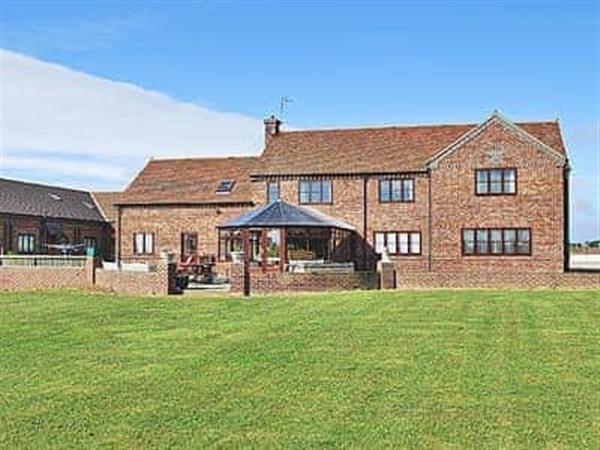
Even the most authentic image benefits from contextual framing. For example, the surrounding landscape can reveal settlement patterns, agricultural practices, and defensive considerations. The photograph below, taken at Stenson Hill Farm in Derbyshire, illustrates the rolling fields and hedgerows that typify the rural backdrop of many Anglo‑Saxon sites.
Implications for the curious beginner
Armed with reliable pictures, beginners can move beyond textbook diagrams to form their own visual hypotheses. By comparing site photographs with artefact close‑ups, a learner might infer trade routes, social hierarchy, or even seasonal activities. Moreover, engaging with authentic imagery encourages a habit of source verification that will serve any future scholarly pursuit.
In short, selecting the right Anglo‑Saxon picture hinges on purpose, provenance, and presentation. Whether you’re drafting a lesson slide, sketching a game environment, or drafting a research note, a well‑chosen image can turn a vague historical period into a vivid, approachable story.